CT scan results (pictures) - PLEASE help

Hi, I don’t know whether in Denmark doctors use a Denmark based AI assistance to help them to diagnose and treat patients. I live in France and doctors have just recently embraced AI assistance developed in France in partnership with the French health insurance system. The only problem is the medical sources used for their AI assistance come from European and French organisations. Given that C1 shaving is not practiced in any European country, no French doctor using this AI assistance is going to ever recommend a C1 shave, even if you have obvious internal jugular vein compression due to the mass effect of C1.

As for headaches due to cranial venous outflow problems you will find the below article interesting and explains the present conundrum clearly. It was written by Dr Higgins a UK neurointerventional radiologist, a headache specialist, who invented cerebral stents; so he should know what he is talking about.

Cranial venous outflow insufficiency; rendered almost invisible to radiological imaging by circular reasoning. Rethinking normal craniocervical venous anatomy.pdf (5.7 MB)

And below is a recent literature review of the varying surgical procedures for cervical internal jugular vein compression. It maybe of use.

Invasive surgical management of cervical internal jugular venous compression A literature review.pdf (508.0 KB)

4 Likes

Don’t think they are up to date on AI here…

Interesting read, thanks!

Still not enough to convince a sceptical doctor on its own, though

Also, you linked the same article twice, just so you know:)

2 Likes

@IJVman - When I clicked on the links @Emerald posted, two different research papers came up. I’m not sure why the two different links appeared to be the same research paper for you.

My surgeon determined I didn’t need a C1 shave during my surgery. He was able to shorten my styloid (it was my second styloidectomy on that side) & then move my IJV away from C1. He said there’s a little bony groove it sits in & my C1 has moved it out of the groove so he put it back in place. I should look into that more as I don’t know anything about “the groove”.

I just re-looked at your imaging. I can’t tell for sure if either side needs C1 to be shaved in order to decompress your IJVs. I suspect the decision about shaving C1 on either side might be have to be made during surgery.

I also don’t want to give you any solid advice about whom to see for your surgery, however, I will say this: If you decide to go ahead & have the surgeon in your country do a styloidectomy close to your skull base, let her choose which side she thinks will give you the most benefit if it’s shortened. Things can look very different in the images than they do in reality when a surgeon can see the situation w/ his/her own eyes. That’s why it’s impossible for any of us to help “push you” toward one doctor or the other.

From what you’ve said, the surgeon you’ve seen at home sounds very experienced, & I think her approach stands a good chance of being helpful for you in having at least some symptoms recovery if you decide to go for a free surgery.

2 Likes

Now I see the two different articles — an interesting read, definitely.

Let me be clear so i don’t seem like I’m on “the wrong side” – I personally fully believe IJV compression is a real problem for many people. I hope my conversations with especially @Isaiah_40_31 and @Jules also gives this impression. I don’t think the people getting better after these IJV decompression surgeries are just imagining it, and I think that the IJV actually is the main culprit often, and I think the doctors dismissing it are wrong. Even though some people — maybe like myself with IJV compression — might get better from removing the styloid so it no longer compresses the nerves, I am sure that the many patients who only get the IJV decompression (Dr. Costantino’s patients for example, who only does C1 resection/soft tissue) and get better is because of the IJV alone being a problem.

However, the first study is essentially a critique of current methods, arguing that we may have been asking the wrong questions all along — which I personally find convincing — but a sceptical doctor could reasonably say it doesn’t prove anything on its own.

The second article (which I can now read) doesn’t prove anything in the “hard scientific sense” that local doctors care about either, as they can only operate within the limits of strict evidence (which differs from privately paid hospitals). This is a useful article and probably points in the right direction, but it cannot really be used as hard scientific proof. By the authors’ own admission, all included studies are case reports and small single-centre cohort studies — there are no randomised controlled trials, no control groups, and no placebo adjustment. That means sceptical doctors can still argue that some of the improvements were just placebo effect, natural recovery, or coincidence. They can especially argue that the benefits didn’t come from decompression of the IJV, but simply from having the styloid removed — so it no longer irritates the nerves and surrounding tissue. The 80% success rate from styloidectomy alone sounds great, but it comes from only 96 patients spread across many different studies, which is a pretty small number to draw firm conclusions from. It also doesn’t prove that IJV compression actually caused the symptoms in the first place. Even in the cases where styloidectomy did help, we don’t really know why it helped — and this is actually the key point for the local doctors. They don’t dispute that styloidectomy helps people, and they accept that an elongated styloid can cause problems by mechanically pressing on nerves and surrounding tissue. What they specifically question is whether the venous compression itself is the active mechanism — because that part still lacks harder scientific evidence.

To be clear again, I am personally 99.9% sure that IJV compression itself is a significant issue — and most likely a significant issue for me specifically, which is why I would only ever consider a styloidectomy if the styloid is removed fully to the skull base, giving me at least a chance of achieving decompression.

In countries with strict evidence-based healthcare systems, they simply don’t offer this surgery routinely for IJV compression — not because the research is worthless, but because it hasn’t cleared the bar they are required to work within. This doesn’t change the fact that the local doctor isn’t stupid, and it’s not as though she outright says there is absolutely no possibility that a compressed IJV could be causing problems — even if she thinks it rarely does in people who happen to have some degree of IJV compression. This is also the reason why she said she could try during surgery to decompress it a bit (which they often do in some ways further down by removing lymph nodes and so on), but there is no way she is going to cut the occipital artery, remove the posterior belly of the digastric muscle, or touch the C1 — which is why I would not let her attempt any further decompression if she were to operate on me, aside from doing a styloidectomy to the skull base. My understanding is also that this makes revision surgery easier, as there will not be scar tissue near the C1/IJV in the same way as if she had also attempted a full decompression. I’m still more than 90% sure that I will go straight for the full decompression surgery though, as I would without a doubt never rest until my headache is either gone or I know for certain that my IJV compression is not the cause. The local surgeon seems to understand this though.

A bit of a rant, I know… Just needed to be clear what the situation is and I’m grateful for all the help here :slight_smile:

2 Likes

Interesting – and once again an argument for me to choose the surgeon who at least knows about the IJV stuff!

Really appreciate sharing your thoughts – I do have to ask if you are now contradicting yourself?, sorry :slight_smile: :

Again, appreciate all the help. And yes, if I do end up with the local surgeon, I’m sure she will have some reasoning behind which side to do first:)

Hi @IJVman,

To put your mind at rest as to whether to do a C1 shave or not, I would book an online consultation with Dr Aghayev. He will go into a lot more detail that the video and answer any questions you have. He will explain why in your case you need a C1 shave. It is also a misconception that he does C1 shaves on everybody.

Just for a little bit of background on Dr Higgins, the neurointerventional radiologist and author of the first article on cyclic reasoning making cranial venous outflow issues invisible. He is usually the doctor at the end of the line that headache patients stumble across when medical treatment fails and they then ask their doctor to refer them to him (not the other way round). He places cerebral stents in cerebral venous stenoses when necessary and he refers his internal jugular vein compression patients to Dr Axon for surgery when necessary. He is author of many medical publications and as I said previously he invented cerebral stents. That said, any doctor with the capacity to reason should be willing to sit up and listen to what he has to say, as he is an internationally reknown specialist.

You will see him from 1:10:44 speaking about headaches in this seminar :

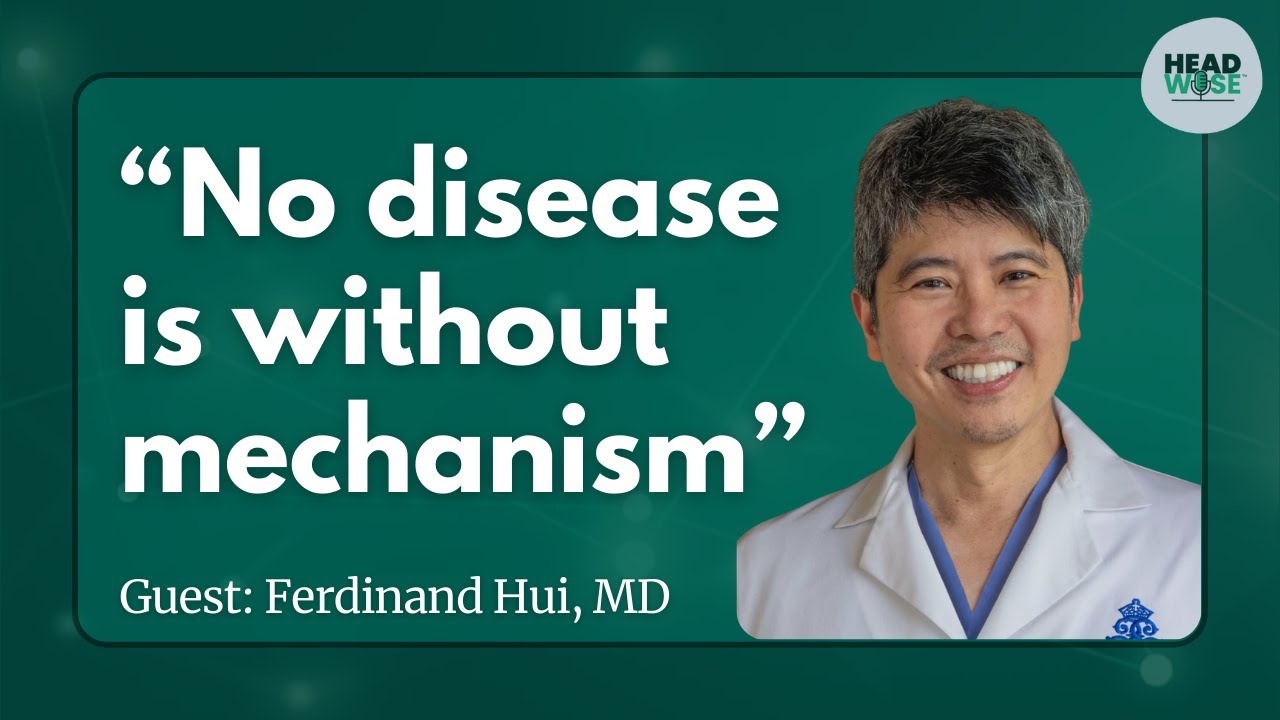
Also you should find the video below interesting about cerebral venous outflow issues and their symptoms such as headaches by doctor Hui, another “enlightened” neurointerventional radiologist but in the US :

Unfortunately for surgeons in Denmark they are probably like those in France, their hands are tied. They can’t start doing C1 shaves even if it is blantantly obvious that it is needed (we will skip the fact that they often don’t know how to assess or even diagnose this on a scan) because nobody has ever done it before and the hospitals wouldn’t allow it (for the reasons you have given). I don’t know if surgeons and doctors are overworked like here in France, but it would be too much of a hassle for a surgeon to plead your case for someone that “just” suffers from headaches. It’s alot easier to “just” put the patient onto a blood thinner and migraine medication or refer them to a chronic pain centre hoping they don’t come back or they continue their nomadic medical journey somewhere else.

3 Likes

It’s so frustrating, I can see the argument for evidence based surgery, but when conditions are rare, and also ‘new’ , there isn’t enough patients to provide these studies! If this is the case, how will any medical conditions ever get discovered and treated, going on their criteria, surgeries like appendectomies wouldn’t have been ever done in Denmark, as at some point this would have been a new surgery, so did they leave appendicitis patients to die, until the rest of the world had been doing them for a number of years, and how was this ever evaluated with placebo/ control trials?! I’m not questioning you @IJVman , just disbelief at the system in your country…

I can’t compare my scan to yours I’m afraid, it was 10+ years ago I had my scan and surgery, and mine was an axial view, I haven’t got a copy…Back then we weren’t aware of C1 compression so it wasn’t something I would have realised or thought to ask about…

2 Likes

Thank you for catching my contradiction & calling me on it. I’m sorry about that. Good thing I’m not the doctor who’s doing your surgery!!

I had to go look at your images again to see why I made the above statement. The difficulty is that in your imaging, you’ve posted several pics of each side, & in one of the right side pics, the styloid/calcified ligament look pretty far from C1, but in another, they look close together.
further apart:

closer together:

There’s a similar situation on your left side where one image shows the styloid & C1 w/ good space between them, & it looks more like the styloid is causing the majority of the IJV compression, but in a subsequent picture it looks like the styloid/C1 are touching.
further apart:

closer together:

I’ve edited my last post so reflect my confusion vs making a more firm statement. I think if you choose to have surgery in your country, you should let your surgeon decide which side she thinks will help the most to have resected then see if any symptoms improve. If not, you have a back-up plan w/ Dr. Aghayev & can proceed with him once you’re healed enough from your first surgery. If you get good results, maybe consider having the original surgeon also do your second styloidectomy?

2 Likes

Thanks for sharing - I had only seen the one with Hui before

I actually already had the online consultation with Dr. Aghayev. He said that in the majority of cases the C1 is the main problem. He also said that my case is extreme, where the C1 has pushed the jugular vein so much forward, and that I have to have the C1 resected.

2 Likes

Yes, due to the head being rotated in different directions for each picture (according to the text in the black box in the pictures) :slight_smile:

Thanks for clarifying your thoughts. I guess I just have to take a decision this week which direction to go…

2 Likes

Yes, I agree - it is frustrating! Anyways - the C1 procedure is allegedly like 1000% more difficult to perform than the actual styloidectomy (according to Dr. Aghayev), which means I wouldn’t trust the local doctors to try anything else than the styloidectomy anyways…

Makes sense:)

2 Likes

@IJVman - I just looked at the annotations on the two images below & am wondering…

Wouldn’t rotating your head to the left open the space more between styloid & C1 on the right than rotating it to the right?

Wouldn’t rotating your head to the right open the space more between styloid & C1 on the left more than rotating it to the left?

3 Likes

First, I will stress that the “neutral position” (which are not the pictures you commented now, I know):

In “neutral position” the top of my head was slighty elevated which made the chin tuck even more intense. “chin tucked a bit” is probably an unprecise formulation - it was quite a lot i guess.
I got the neutral scan first, and I’m not sure if this could have affected to next scans (depending on which sidelooking I did first).

For the record, Dr. Kamran said it should not be possible to cut the IJV’s off entirely by tucking the chin in no matter what.
The headache intensified during the “neutral” scan, which is one of the reasons I’m certain it is mechanical (either from nerves of IJV being compressed).

Anyways - to answer your questions:
Well, in the first picture you just sent my head is rotated to the right, but you question seems to indicate that I’m looking to the left. And vice versa with the second picture. maybe the photos were switched up when you uploaded them? Also, you are not specifying which side of the C1/styloid you ask about when you say “space more between styloid & C1”, which makes it harder to answer correctly maybe.

anyways, the space between my styloid and C1 is - in both sides - more open than in neutral.

Also, when looking to the left, it’s hard to conclude that the space between C1 and styloid is actually bigger (in cm) in either side. However it seems like the LEFT IJV is more full than the RIGHT IJV when looking to the left. This part can’t be explained with logic I reckon - one would expect the opposite.

When looking to the right, apparently the drainage is better in my LEFT IJV than it is in my RIGHT IJV - this part seems reasonable/logical.

1 Like

I edited my post so my questions may be more clear.

Based on the labels in the black boxes in those two images, what I am asking is why does the space appear bigger between styloid & C1 on the right w/ right head rotation & bigger on the left side w/ left head rotation. That seems like it would be the opposite of what I’d expect i.e. more space would be created on the right with left head rotation & on the left w/ right head rotation. Perhaps my thinking isn’t confused as you suggested. :zany_face:

1 Like

I don’t think your thinking is confused, I’m certain I’m confused by all this left/right/right/left talk :wink:

I might be saying “left/right” the wrong way, but in the following when I write “right IJV” that means the right if one is looking from my perspective. Like the one closest to my right eye :slight_smile:

LEFT IJV:
When the head is rotated to the left, the left IJV looks more open than when looking to the right. I agree with you in this being counterintuitive/illogical.

RIGHT IJV:
When the head is rotated to the left, the right IJV is more open than when the head is rotated to the right. This seems reasonable.
However, the actual space (in centimeters) between the right styloid/C1 doesn’t seem notably different when looking right or left, which one could argue is weird/not logical.

Why it still makes sense to me:
Honestly - considering the effect of having the chin tucked in neutral position, I think the main important factor is the position of the chin (whether it is chucked in or not). This is supported by the fact that I remember reading that people with IJV compression might find relief by sleeping on the side with their head tilted up/looking “up”. In other words - doing the opposite of chucking the chin. Therefore I haven’t put that much into the specifics of the pictures, as I just know that with SOME headpositions my IJV’s are definitely compressed.

Not sure whether we agree @Isaiah_40_31 ? :blush:

3 Likes

I agree. I will say that when you look at your imaging from the front, your right styloid is on the left & the left is on the right so your perception does explain why I was confused. I think we’ve hashed this out for long enough as it’s not of any consequence as far as your diagnosis goes. It’s been an interesting discussion for me. Thank you for being willing to pursue it. :sparkling_heart:

3 Likes