Recently diagnosed eagle syndrome after video conference with Dr. I have plenty of questions and rants about my whole story as I’m sure most on this site. I’m curious if others have one side eagle but the pain and problems are on the opposite. I keep getting asked if the left side bothers me. But all my issues are on the right. It’s as if there surprised my left side isn’t causing problems. I had this happen with my spinal surgery. The surgeon didn’t understand why my left side looked as bad as it did but all my issues were on the right. Just curious because one side is segmented but short and the other is just under 4cm.
Welcome to the forum @Getmused! My shorter side bothers me the most because it’s got a goofy angle, so I can relate to you on that. What are your symptoms?
@Getmused - It’s not uncommon for a styloid to cause what we refer to as cross-over symptoms i.e. symptoms on the opposite side. What you may find, which many of us did, is that it’s really hard to tell which styloid is causing particular symptoms until one is resected. Once one is basically gone & several months of healing time passes, the symptoms the remaining styloid are causing often becomes more obvious. When I had my right styloid shortened (it was my shorter one), I continued to have some symptoms on the right side. When my left styloid was shortened, the right-sided symptoms stopped as well as most of those on the left side.
@lsheep - gave you good information i.e. that the angle a styloid is growing can be more significant in causing symptoms than how long the styloid is. Would you be able to upload some pictures from your CT scan on our forum so we can comment about what we see? If you don’t have a copy of your imaging, you should be able to get a CD containing the CT images from the radiology clinic where your scan was done. You can then upload them onto your computer & use either radiantviewer.com (for PCs) or Bee Dicom Viewer App (for Macs) to help you better see what’s going on in your neck.
Thank you for the pictures. I edited your images because your name & age appeared at the top of each image. Please try to be careful to cover up personal information before posting images.
I’m glad you got screenshots from what Dr. Osborne showed you. Both of your styloids are thick, but the left side is the thickest. Both also look significantly curved inward which would bring them into closer contact w/ the nerves in the area. Is your cervical spine fused?
It looks like your right IJV is dominant & looks like it may be suffering some compression from the styloid, but again, the picture isn’t clear enough to determine that for sure. Your left IJV might be hypoplastic i.e. it’s dramatically smaller in diameter than the right almost looking under-developed. Part of your cervical spine looks shifted somewhat significantly to the right relative to C1.
Thank for the insight about my ct. I’m curious why you ask about fusion? Can you see the fusion? I had a c5/6. Dr Osbourne mentioned compression of either internal or external jugular. Can you tell if the left styloid is segmented? According to the ct my right is 3mm away from carotid.
Your right side is very angled, so not surprised that you get symptoms! With your left, there’s a small area of calcified stylo-hyoid ligament below it. I can’t see clearly if there’s any compression there. It’s hard to see in these images whether there’s IJV compression either side…but Dr Osborne is a very experienced doctor, are you thinking of seeing him for surgery as well?
I know this is an eagle site but I’m also fairly confident I have omohyoid syndrome and believe that’s why my right jugular is compressed down by my hyoid. Has anyone dealt with this?
In cases of Hyoid Bone Syndrome (HBS), it’s usually the internal, external or common carotid artery that gets compressed. IJV compression on that area is often caused by soft tissue such as muscle, nerve, vascular, scar or lymph node. Because you pictures aren’t very clear, I can’t see if that’s the case for you.
HBS symptoms typically also include pain & clicking when swallowing. Do you have either of those symptoms?
Regarding why I asked about cervical fusion, in the pics you posted, your C1 vertebra is nicely aligned with your skull but the vertebrae below it all look “glued together” & shifted to the right below C1. Since you only have C5-6 fusion, that must just be some quirk in the imaging you posted.
Yes I do get clicking but a little more abrupt than a click. It really feels like something gets hung up then I’ll hear the sound. When my “incident” happened there was a loud pop like a ligament when I coughed. Haven’t been right since.
Interesting, because my c1 can shift usually to the right, especially when things are at worst.
We’ve had I think one member mention omohyoid syndrome, it’s not something we’ve had many members diagnosed with… you can use the search function to look that up, it’s been mentioned as being linked to TOS…
Also has anyone dealt with eye droop and head tilt? This is really important to me because everyone thinks I’m “high” or drunk. Which is unfortunately funny to me, knowing my situation. And I don’t really care what others think but it can affect my life in odd small town ways.
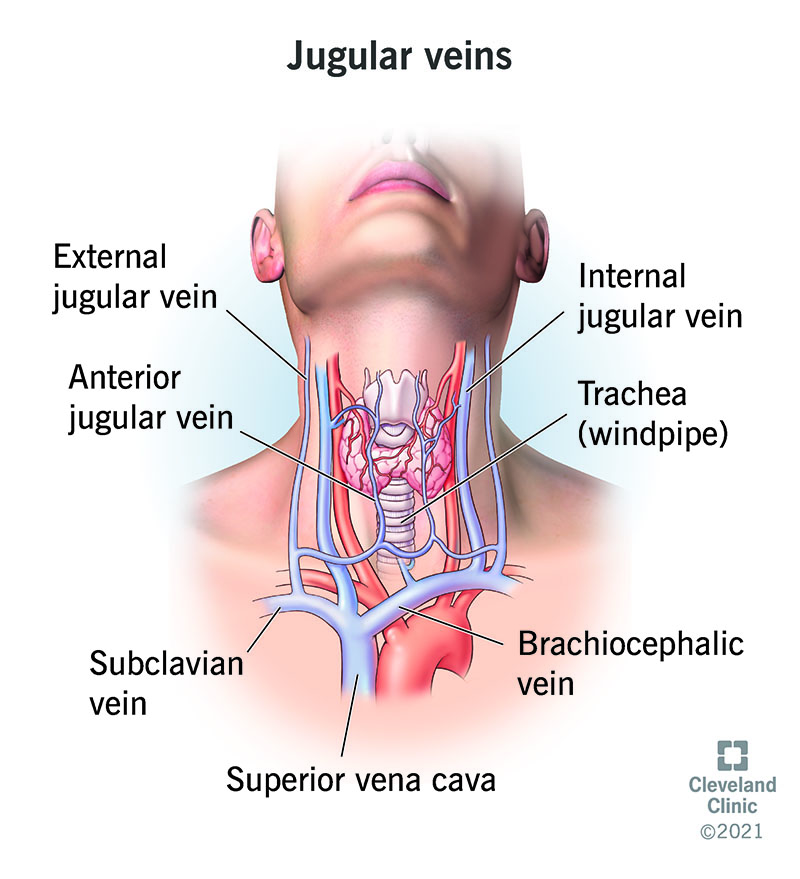
@Getmused - TOS is Thoracic Outlet Syndrome which is essentially vascular or nerve compression between the collar bone & first rib. It can coincide with IJV compression up near the skull base as it’s the subclavian vein that gets compressed which is the vein the IJV leads into below the collar bones.
Eye lid droop can be caused by injury or irritation of the facial nerve which is one of the cranial nerves most often irritated by elongated styloids. The other thing that an eyelid droop can indicate is IJV compression. My left eye didn’t open as far as the right one prior to my left IJV decompression.
Head tilt can be a cervical compensation from having elongated styloids but can also be due to loss of lordotic cervical spine curve. My cervical spine actually curves slightly left so I have a right compensatory head tilt. In our cases, it has nothing to do w/ alcohol consumption but everything to do w/ our bodies trying to keep the horizon horizontal in front of us.