Almost 3 years with unknown diagnose. Potential Eagle, Throat pain. Help!

Hello,

In 2022, I began noticing a strange sensation in my throat: a kind of brief, random spasm that was not painful, as if something contracted for a second. I went to an ENT specialist, who told me that anatomically “there was nothing there that could contract.” He diagnosed me with chronic pharyngitis and prescribed antibiotics. Over time, those spasms disappeared.

However, in 2024, the pain I am still trying to understand today appeared for the first time. I remember it started after forcing my cervical posture while reading in bed with my son, while also heavily straining my voice. Since then, the condition has manifested as a very localized pain on the left anterolateral side of my throat, approximately at the level of the cricothyroid, thyrohyoid, and hyoid regions, sometimes even extending toward the uvula area. It is difficult for me to describe the exact anatomical origin, because pain in the neck and throat can feel diffuse and misleading, but the predominant sensation is one of burning, inflammation, and deep irritation.

The pain is not sudden. It appears progressively, as though the area slowly becomes sensitized, and it can last for hours. In the same way, it fades gradually. There are days when it does not appear at all, and others when it becomes particularly bothersome. I also feel discomfort at the base of my tongue, almost like muscular tension or a localized hypersensitivity in the tissues.

Over time, I have identified some possible triggers, although I still cannot reliably predict the pain. Prolonged cervical postures seem to play a significant role: bending my neck to look at my phone, reading for long periods, or maintaining tension in my neck. Sudden neck movements can also leave the area feeling “sensitive,” making it easier for the pain to appear hours later. I want to emphasize something important: the pain does not appear like a sudden stab or shock. It builds slowly.

Alongside this, I experience other symptoms that I do not know whether they are related or not. I suffer from tinnitus and a peculiar irritation in my left inner ear, a kind of itching sensation that is oddly relieved by clicking my tongue. At certain moments, I also experience significant vocal fatigue and tension in the soft palate that is difficult to describe, similar to that feeling of emotional tightness before crying.

One thing that confuses me is that my condition seems “silent” in relation to certain normal functions: yawning, clearing my throat, or coughing do not trigger pain. In fact, swallowing food can sometimes temporarily relieve it. Swallowing saliva, however, can occasionally feel strange, almost as though my throat momentarily locks or hesitates. During those moments, the same brief contraction I experienced years ago can sometimes reappear, although this is occasional.

Throughout this process, several possible diagnoses have been considered. Initially, there was discussion of glossopharyngeal neuralgia or superior laryngeal nerve neuralgia. I was prescribed carbamazepine, but the results were inconclusive. Later, other specialists considered the possibility of thyrohyoid syndrome. I underwent a lidocaine injection, although a single infiltration did not produce any clear improvement.

The same doctor who suggested thyrohyoid syndrome also raised the possibility of an atypical dystonia. However, other laryngologists dismissed that idea because I do not present the classic symptoms, such as a broken, spasmodic voice or chronic coughing.

Eventually, a neurologist, after seeing that my MRIs and initial CT scans showed no clear findings, suggested that I consider the possibility of a functional neurological disorder. Wanting to honestly explore every diagnostic avenue available, I agreed to continue investigating from that perspective. Before completely ruling out the ENT field, the same doctor recommended repeating the CT scan to exclude other possibilities, including Eagle syndrome.

And it was precisely on that latest CT scan that a new finding appeared: elongation of both styloid processes due to calcification of the stylohyoid ligament. The right side measures 5 cm and the left 4.1 cm. I was told that measurements greater than 3 cm can be clinically significant and that, in the appropriate clinical context — odynophagia, dysphagia, otalgia, or certain vascular symptoms — these findings could be associated with Eagle syndrome.

At the moment, I am waiting to speak again with the laryngologist to determine how significant these findings truly are and whether they could explain part of what I have been experiencing for over two years.

I will not hide the fact that this process has caused me considerable anxiety. After such a long time without clear answers, one inevitably develops a constant awareness of their own body. And the problem is that nearly every doctor agrees that anxiety amplifies pain, creating a difficult cycle to break.

I would also like to share the results of my most recent CT scan, along with the tests performed in 2024 and 2025, in case anyone has experienced something similar or may be able to offer some insight. I hope I have explained myself clearly. Above all, I want to send encouragement to everyone going through long, ambiguous, and exhausting medical processes.

This is what the radiologist found:

CT Scan of the Cervical Spine Without Contrast
Cervical CT

Clinical Information:
Rule out left-sided Eagle syndrome.

Study Technique:
Cervical CT with multiplanar reconstructions using a bone algorithm.

Comparison:
Not available.

Findings:

  • Elongation of both styloid processes due to calcification of the stylohyoid ligament:

    • Right: 50 mm

    • Left: 41 mm
      (values greater than 30 mm are considered significant).

  • Findings which, in the appropriate clinical context (odynophagia, dysphagia, otalgia, or vascular symptoms), could be related to Eagle syndrome.

  • Multilevel cervical degenerative changes (uncovertebral/disc arthrosis), predominantly at C5-C6 and C6-C7.

  • At C5-C6: diffuse disc bulging with moderate foraminal stenosis.

  • At C6-C7: left foraminal disc protrusion/herniation with a disco-osteophytic component, contacting the exiting left C7 nerve root (clinical correlation recommended).

  • Facet arthrosis with mild hypertrophic changes at the left C7-T1 level.

  • Opacification of the right maxillary sinus with an air-fluid level, consistent with acute sinus disease.

Conclusion:

  • Bilateral elongation of the styloid processes (more pronounced on the right side), related to ossification of the stylohyoid ligament. Potentially compatible with Eagle syndrome in the appropriate clinical context.
1 Like

These are some images of my latest CAT

1 Like

I also want to mention that the only medication that seems to provide me with some relief — although I am still not entirely sure to what extent — is Valium. I have often wondered why it helps in the first place. Has anyone experienced something similar, or knows of other medications that may be effective?

Thank you so much for allowing me to be part of this community and for giving me the opportunity to share my experience!

2 Likes

This is so under diagnosed, your styloids are an issue, they need to be addressed, I am so sorry no one has seen or addressed this, but it is a common miss. :frowning: Your pain is so real!

3 Likes

@Algobe - Welcome to our forum!

Many of the symptoms you have are among those seen w/ ES so I expect that once your styloids/calcified stylohyoid ligaments are resected, you’ll begin feeling some very positive changes over time. I have to say that ES surgery often doesn’t provide immediate relief of ES symptoms because cranial nerve irritation, which is primarily responsible for non-vascular ES symptoms, can take quite a number of months to resolve. Nerves can be slow healers. Many of us of had nearly complete recovery from the pain & other symptoms those irritated nerves cause so surgery, when done by a surgeon who’s very experienced w/ ES surgeries, is quite successful.

Here’s a post which our moderator @Jules wrote that will help you better understand the possible causes of your symptoms: ES Information: Common Symptoms And Possible Explanations For Them.

ES symptoms are odd in that they can come on gradually, & often without explanation, as you described. They can hang around for several days to weeks then completely disappear for a while before returning again & bringing new friends with them. As you’ve observed, symptoms can get worse over time. I’m sorry that you’ve been dealing with yours for almost 3 years.

Irritation/pain in the ears + tinnitus can be caused by an irritated trigeminal nerve, soft palate, tongue & swallowing issues can be related to glossopharyngeal nerve irritation & vocal fatigue & swallowing can be caused by irritation to the vagus nerve. These 3 cranial nerves along w/ the facial, hypoglossal, spinal accessory, & possibly the vestibulocochlear nerves are those we most often know can become irritated by elongated styloids.

I’ve looked at your images & can see that your styloids are longer than normal then there’s a gap between them & a section of calcified stylohyoid ligament on each side. I also noted that you have an atypical C1 vertebra which I believe contains an arcuate foramen or ponticulus posticus. It’s generally not a problem but in some cases can cause vascular symptoms due to compression of the vertebral artery. Has anyone mentioned that to you? Fortunately, the symptoms you’ve mentioned don’t indicate that you have any vascular compression at this time.

4 Likes

I agree with @Isaiah_40_31 that your symptoms have all been described by members, as well as the Newbies Guide Info, you can always use the search function to look up symptoms & I’m sure you’ll find them mentioned in other discussions! You mention anxiety- I think most of us have been there wondering what’s causing our symptoms & heightened awareness of them, over thinking etc… But in addition, the vagus nerve can be irritated by the styloids so can also cause anxiety & flight or fight sensations itself!
There are other nerve pain medications which might help you other than carbamazepine, so might be worth trying? There’s info under ‘treatments’ in the Newbies Guide…
Your imaging doesn’t show your hyoid bone, this can sometimes cause issues as well if the processes are long, thick, angled or pointed just like the styloid processes can, I don’t know why it’s not visible?! Has this been looked at do you know? It’s just worth checking all possibilities before deciding on surgery…

3 Likes

Welcome @Algobe! So sorry you have been experiencing these awful symptoms!

2 Likes

First of all, I want to thank you for your response, support, and the time you took to review my images. @Isaiah_40_31 The information you shared, especially regarding cranial nerve involvement and findings such as the ponticulus posticus, was extremely valuable. None of these mechanisms had ever been properly explained to me by the many doctors I have consulted over the past few years.

To be honest, the diagnostic process has often been confusing and discouraging. I have received explanations ranging from “it’s all in your head” to atypical dystonia. I am Spanish but currently live in Illinois, so I have been fortunate enough to consult specialists both in Spain and in the U.S. After all this time, it finally seems that I may have found the first doctor who genuinely considered Eagle syndrome.

One thing I keep wondering about is the role anxiety may play in all of this. Can anxiety not only intensify pain, but also change the way it is perceived? In other words, can the same structural issue produce different pain sensations depending on nervous system sensitization or hypervigilance?

I also have a persistent muscular contracture on the left side of my neck that has lasted for over a year, and I sometimes wonder whether it could be related. It is difficult to determine whether the pain originates around the thyroid cartilage, the lateral neck structures, the hyoid region, or whether some of it is referred pain.

I have long suspected involvement of the hyoid bone or the thyroid/cricoid cartilages because that is where the pain most commonly localizes. Unfortunately, the radiologist was not specifically evaluating those structures in the scans I initially shared. However, using my CT scans from 2024 and 2026 with the RadiAnt DICOM viewer, I hope to soon share more detailed images.

Another thing that puzzles me is why Valium seems to help my symptoms more than any other medication. Thanks @Jules for your info. Anti-epileptic medication prescribed under the assumption of neuralgia was not conclusive. In fact, my symptoms do not fully resemble the descriptions I read from patients with classic neuralgia. My pain is not electric, stabbing, sudden, or shock-like, nor does it occur in short attacks. Instead, it feels gradual, structural, inflammatory, mechanical, and anatomically localized, as though something becomes irritated or mechanically sensitized over time.

At this point, I will discuss with my doctor whether surgery is appropriate and what the most reasonable options may be moving forward, although I understand surgery itself may also carry risks.

@MGORNEAU @lsheep @Isaiah_40_31 @Jules Thank you again for your kindness, your time, and your thoughtful explanations. After such a long and uncertain process, being able to discuss these findings with people who understand this condition truly means a lot to me. And I thank in advance future opinions!

2 Likes

I would guess that perhaps Valium relaxes you, and helps with the pain cycle, where you perhaps get tense & inflamed muscles because of it, which can then trap nerves & cause more pain…a guess though, not a medical opinion! And anxiety could also cause you to tense up as well, plus long term effects of stress where cortisol causes more inflammation?
@Chrickychricky has posted about neuroplasticity ( Neuroplasticity is the brain’s ability to reorganize and adapt its neural connections in response to learning, experience, or injury) , which you might find interesting to read:
Symptomatic.me | Understand & Heal Neuroplastic Pain
Public Q & A if you are interested in learning more about neuroplastic symptoms and treatment - General - Living with Eagle

Other members have had enlarged, tight muscles, this all seems to be linked, the SCM muscle is particularly often affected.

There are 2 types of neuralgia; type 1 is the electric shock like pain, but type 2 or atypical neuralgia is more of an aching, burning or boring pain, which many of us have with the trigeminal nerve, I have toothache for example but there’s nothing wrong with the tooth…

3 Likes

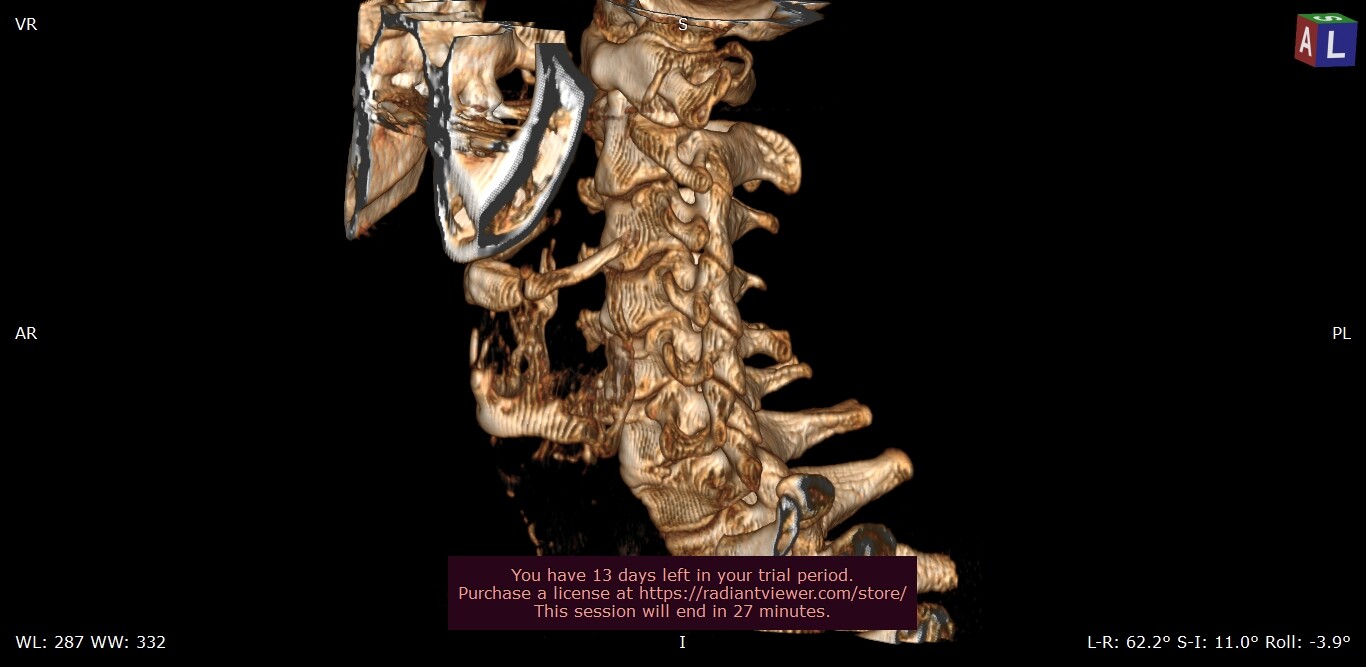
I am also attaching additional 3D images from my most recent CT scan (April 26), where the hyoid bone and surrounding cartilaginous structures can be seen more clearly. I would deeply appreciate any thoughts or opinions.

I also wonder whether other anatomical areas could be contributing to my symptoms. I plan to review both my 2024 CT scan and my 2025 MRI to better understand why no significant findings were identified at the time.

Many thanks to everyone for your time and kindness.

1 Like

Thank you for the images of your hyoid bone & thyroid cartilage, @Algobe. Looking at them together, I can understand why you have pain in that area. The greater horns of your hyoid are thick & somewhat long as they look close to your cervical spine in the sagittal image of your left side, however, from the right side, it looks like there’s more space between the greater horns & your cervical spine. Perspective can make a difference in how bad or how benign some of these things appear.

Your thyroid cartilage/hyoid bone relationship looks to be more the issue than the greater horns. The thyroid cartilage is more calcified than we often see, & part of the calcification extends up to your hyoid bone which means it could be interfering w/ hyoid bone movement when you talk, swallow, breathe, laugh, etc., putting more stress on your stylohyoid ligaments, which are already compromised by the calcification on them. This would possibly be more in the category of Clicking Larynx Syndrome. We have one doctor on our list who’s in Louisiana whom we know does surgery for that but she doesn’t do surgery for ES. Two other doctors on our Doctors List do ES & Hyoid Bone Syndrome surgeries, but we don’t know if they also treat Clicking Larynx Syndrome. For any of these diagnoses, seeing a doctor who knows about them & has lots of surgical experience treating them will provide you with the best outcome.

I think @Jules covered the answer to this very well in her replies: You mention anxiety- I think most of us have been there wondering what’s causing our symptoms & heightened awareness of them, over thinking etc… But in addition, the vagus nerve can be irritated by the styloids so can also cause anxiety & flight or fight sensations itself!..anxiety could also cause you to tense up as well, plus long term effects of stress where cortisol causes more inflammation…

Nerve medications vary in their effectiveness from one person to another & also from type to type. Some nerve pain medications are anti-seizure medications, as you mentioned whereas others are anti-depressants. The mechanism of symptom relief differs between the two categories & even w/in a category i.e. Carbamazepine didn’t help you much, but Amitriptyline or Gabapentin might be very helpful. It can also take a number of weeks & trial of different strengths to get pain relief. Unfortunately, dealing with the side effects of these medications is sometimes too much for people so they choose not to take them for that reason. If the anti-seizure variety doesn’t work for you, perhaps, something in the anti-depressant category would. I also understand if you’d rather not take something like that to try to control your pain.

Jules also gave a good possible explanation as to why Valium is likely being helpful for you: I would guess that perhaps Valium relaxes you, and helps with the pain cycle, where you perhaps get tense & inflamed muscles because of it, which can then trap nerves & cause more pain…

3 Likes

I agree with @Isaiah_40_31 that your thyroid cartilage is pretty calcified, it is normal for this to happen, but yours is more so than we often see, so I wonder if it is part of the problem, you mention that thyrohyoid syndrome was suggested, so that could be right. I know you mentioned that a steroid injection didn’t help, I don’t know too much about it, but we do see members who are given steroid/ lidocaine injections into the styloid area which is also suggested as a diagnostic tool , and this doesn’t always help, so it’s not very accurate! And tendonitis conditions like tennis elbow don’t always respond to steroid injections either, so just because the injection didn’t help, it might not mean you don’t have it?
There is one doctor we were told about who has done thyroid surgery & published a research paper too, I don’t know if he does telehealth consultations but might be worth asking?
Dr Marshall Smith, Salt Lake City (Successful thyroid cartilage surgery on ramblinman but does not do ES surgery) Marshall E. Smith | University of Utah Health
Has published a research paper into clicking of the throat & successful surgery:
Clicking in the throat: cinematic fiction or surgical fact? - PubMed
I wish we could give you a definite answer as to what’s causing your symptoms & the best way forward, but it looks like yours could be a complicated case, and not clear cut, so it’s a good idea to explore all these possibilities before deciding on surgery :roll_eyes:

3 Likes

@Isaiah_40_31 @Jules Wow… I am amazed by what you have shared with me. This information is extremely relevant. I sincerely thank you for your perspective and for the information you have offered.

Calcifications in my larynx… On one hand, this brings me some relief because it confirms something that my own reasoning had always considered possible. On the other hand, it is unsettling, because I would like to know whether my condition still has a significant margin for reversibility.

Honestly, I have always suspected the possibility of calcification in some of these structures. The fact that you are able to identify them feels like an enormous step forward for me. In less than a week, I feel I have made more progress than in the past two years.

My question now is the following: I will look into the options and doctors you have suggested, but I also have an appointment with a laryngologist in Spain on June 1. He will likely confirm the elongation and calcification of the styloid process and stylohyoid ligament, since this is evident and appears on my CT scan.

However, how do you think I should approach the possibility of also asking him to look carefully at the hyoid bone and thyroid cartilage? As you know, doctors can be difficult to navigate psychologically: one has to be careful not to contradict them, not to lead them too much, not to make them think the patient is imagining things, and not to wound their professional pride.

For that reason, and as proof of my inexperience and lack of medical knowledge, how accurate are the 3D reconstructions from RadiAnt DICOM? How can I encourage him to also consider whether these two structures may be contributing to my symptoms?

With doctors, one often feels as if one has only a limited number of “bullets,” and I do not want to waste them. Do you think it would be advisable to mention that this forum has offered me potentially important information? To be honest, I found this forum through Mayo Clinic Connect, and I believe Mayo Clinic is prestigious enough that, if they recommend this forum, there must be a serious reason for it.

Is there anyone who knows the best strategy for presenting your observations to the doctor?

Thank you so much @Isaiah_40_31 @Jules

3 Likes

I think it depends on the doctor, everyone is so different. You absolutely nailed it with the “limited bullets” comment. I sometimes feel like it is similar to a game of chess, one wrong move will land me in checkmate.

4 Likes

It is difficult to know for sure, and I’m expect that doctors probably get very wary of patients who ask about rare diseases they’ve found out about online! I guess all you can do is gauge the doctor’s openness on the day, some are very helpful and will go through reports/ images, others are less communicative. Maybe ask if they’ll show you on the images what they’ve noticed, and then point out the thyroid & hyoid and ask if these are normal? We do also sometimes suggest that members print off a research paper or two if they mention your symptoms and show the doctors, but again not all doctors are receptive to that…
The Mayo clinics don’t seem to be very open to ES, so I’m surprised that they recommend out forum… we are just volunteers here who have seen a few scans over the years, no medical training at all!

3 Likes

I agree with the approach @Jules has suggested. My thoughts as to how to approach the laryngologist were very similar.

I believe they are very accurate, however, other information can be gained from looking at the axial slices from the CT scan in the areas in question. Unfortunately, the only experience we have w/ axial Ct images is of the slice taken at the level of C1 as that can help us better determine how significant the C1 involvement is in IJV compression.

3 Likes

@Isaiah_40_31 @MGORNEAU @Jules Thanks everyone once again for the opinions, perspectives, and information you have shared with me.

I completely agree that, when speaking with doctors, it is important to know how to present the information and ideas one has gathered, and that is not always easy. You all are right, It depends on the doctor and on how open they are to discussion and interpretation.

@Jules When I mentioned that I had found this forum thanks to the Mayo Clinic. Now I realize that I may not have been accurate. What I actually found was a forum called Mayo Clinic Connect, where Eagle Syndrome is discussed, and through one of the comments there I eventually discovered the Living with Eagle forum. At this point, I honestly do not know how directly Mayo Clinic Connect is affiliated with or connected to the Mayo Clinic itself. Is it truE Mayo does not consider ES?

I speak from a complete ignorance, I am not personally capable of interpreting medical images. That is why I was asking about the reliability and accuracy of the 3D reconstructions. I understand that nobody here is a physician, and that the observations being shared come from having seen many scans over time and from gradually learning to recognize recurring patterns through experience. Even so, I emphasize how valuable your input has been to me. Many of the things you pointed out are details I would never have recognized but just suspected.

3 Likes

I’m glad that you’ve found the site helpful!
Members have regularly reported to us that Mayo on the whole don’t diagnose or seem knowledgeable about ES, but there may well be some clinics who do…

2 Likes

The thing is that I am going to see the doctors on June 1. My plan is to listen carefully to what the doctor says. After hearing his opinion (Dr. Llópez Carratalà at Vithas Clinic in Valencia. I do not know if he deals well with ES, I will let you know), I may also ask whether other calcifications, such as the ones some of you have mentioned, could be contributing to the symptoms.

After reading several people in this forum mention the “globus” sensation, I am not entirely sure what the symptoms of globus actually are.

My second question has to do with a possible line of reasoning that might help me explain my pain, or at least help me raise the mentioned calcifications with the doctor> since Eagle Syndrome has been confirmed on my scan, could it be possible that the elongated/calcified styloid area is compressing or irritating a nerve, vein, or artery, and that the pain is therefore being expressed as referred or radiating pain? My pain (that feels like a toothache, constant, burning, boring, etc) is often located in the cricothyroid left side but…who knows.

Thanks,

Algobe

1 Like

It does sound like atypical/ type 2 nerve pain… Globus sensation is the feeling of a lump/ something stuck in your throat- it is a ‘classic ES’ symptom, one which some doctors insist on to diagnose ES, but not everyone has it, I didn’t.
You could ask the question of whether it’s referred pain ; the glossopharyngeal nerve is often irritated by ES and does go to the pharynx, so you could phrase it like that & then say ‘or could these other calcified structures be causing pain, are they normal?’

2 Likes