New story, seeing Dr. Merati in Seattle, needing some advice

Hello! I have been browsing this forum and got a ton of useful information. And it’s time I share my story as I go in my own journey.

Story

About 10 years ago when I was 24, I started to feel something behind both my eye balls. Initially I thought it’s from long screen time because I was a tech worker and played FPS video games all night, and it did disappear from time to time and came back. But eventually the sensation of foreign object stuck with me. And it went from affecting both eyes to only my right eye.

For almost 5 years, I thought it’s an eye problem, and used eye drops to try to relieve. I even went to an eye doctor who prescribed me some allergy eye drops, which obviously didn’t help.

But in the recent 5 years, the location of the sensation migrated from the back of my eyes, to the back of my nose, and eventually to my throat on the right side. In the recent 2 years, it progressed much faster, to the point that every few months it became more noticeable and more annoying.

So in 2023 I went to Bellevue ENT, did a CT scan and got a diagnosis of possible Eagle Syndrome, because my styloid process is mildly elongated. But I hesitated to consider surgery because the symptom is not that bad. But in 2025 I finally decided to go to UW medical center and I am currently with Dr. Merati.

Symptom

Globus sensation in throat on the right side

  • No pain most of the time, just annoying. I could forget that exist it if I am distracted
  • Gets better after I eat, but only temporarily for ~1 hour
  • Gets worse and painful when I get a gold, or when I am really tired at night
  • Mentally -
    • The sensation is distracting and makes me hard to focus and more easily irritated, and hard to relax so I am more exhausted
    • I often find myself hold my breath unconsciously, to attempt to get rid of the sensation

Visits

After the first visit, I tried speech therapy, which didn’t help at all. I just had my 2nd visit, and the doctor said there were 3 causes he knew of: 1) reflux from stomach (which I do have) 2) nerve damage 3) Eagle syndrome. He is not convinced it’s Eagle syndrome yet, because my left side is longer yet my problem is on the right side.

So I will try acid reducer to reduce reflux first, and then do a nerve block to reduce inflammation and see how much that helps, and move on to surgery if neither helps.

Advice needed

  1. Is there anything else I can do to determine whether the problem comes from the styloid process? I did talk to my doctor and asked for another CT scan, and still waiting to do that
  2. Is it worth doing the nerve block and other explorations, or should I just push for a surgery sooner?
  3. I also read good things about Dr. Samji in the forum. Any reasons and advantages to consider Dr. Samji instead? I guess maybe he did more surgeries and had more experience, but my doctor said it’s not a complex procedure
4 Likes

@qchero thanks for sharing your story! I think you’ve come to the right place.

I suspect your styloids are irritating/compressing your facial and glossopharyngeal nerves, given the face and throat sensations you’re experiencing. Glossopharyngeal nerve is important in voice production, which could explain why you were sent to a speech therapist. Acid reflux is typically due to vagus nerve irritation which can happen between the styloid and C1.

Do you have access to your old CT imaging? Was it with contrast? I can check the level of C1 to see how much compression is occurring for you?

Also, it’s not always the length of the styloid that is a problem, it’s often the angle of the styloid or how the body navigates around it.

2 Likes

Thank you! My old CT in 2023 was done with contrast. I am going to ask for the imaging when I do my new CT next week, and then post here if they still have it. My new CT is without contrast.

it’s not always the length of the styloid that is a problem

I explained that to my doctor, and that for some people the brain magically suppresses the sensation on one side and after surgery on one side they had to do the other side later - I feel I could be one of them, because I could vaguely sense something on my left side too. But I don’t think he is convinced :slight_smile:

2 Likes

Hi & welcome to the site!
As @TML says, the angle can make a difference with what symptoms are or aren’t caused, & the thickness of the styloid too. & you’re right that often people do get symptoms from the opposite side after surgery for their symptomatic side- whether it’s because there’s a shift in the neck when one styloid is gone, or whether one was masking the other we don’t know, & we have had a couple of people with cross-over symptoms, where the symptoms where felt on the opposite side!
For many doctors it isn’t a complex surgery, but there are lots of cranial nerves & important blood vessels in the area- the facial nerve particularly is very delicate and easily damaged, so this puts many doctors off doing the procedure. Also if a doctor isn’t confident enough (or not that knowledgeable) to shorten the styloid as high as it’s safe to do, then the surgery might not help. We’ve had quite a few members whose styloids were shortened a bit but not enough so they still had symptoms.
So firstly it’s worth considering the risks of surgery (as with any surgery there’s risks of bleeding, or stroke, & with ES surgery there’s risks of nerve damage to the facial nerve which can cause facial paralysis, or the spinal accessory nerve which can cause shoulder or arm pain/ weakness.), and weighing that up against the symptoms you have and what effect on your quality of life they’re having. There isn’t really any definite way to tell for sure about whether the surgery will work, but the nerve block if you have one can sometimes give you an idea…
Then secondly, in choosing the right doctor there’s questions we suggest you ask in the Newbies Guide Info section about surgery. Dr Samji has done lots of successful surgeries for members with ‘classic’ ES like it sounds as if you could have, if members have vascular ES symptoms we suggest they see one of the doctors more familiar with that. Do you know how many of these surgeries Dr Merati has done?
Here’s a link to the surgery info:
ES Information- Treatment: Surgery - Welcome / Newbies Guide to Eagle Syndrome - Living with Eagle

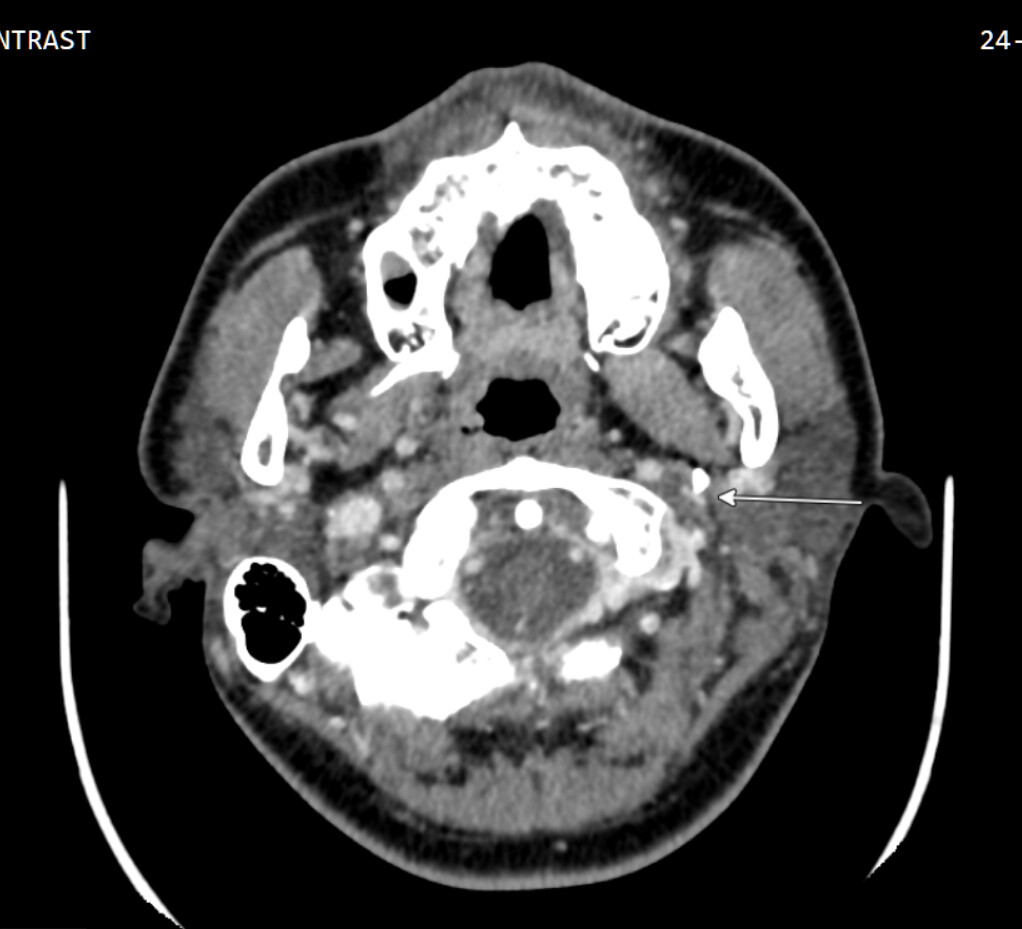
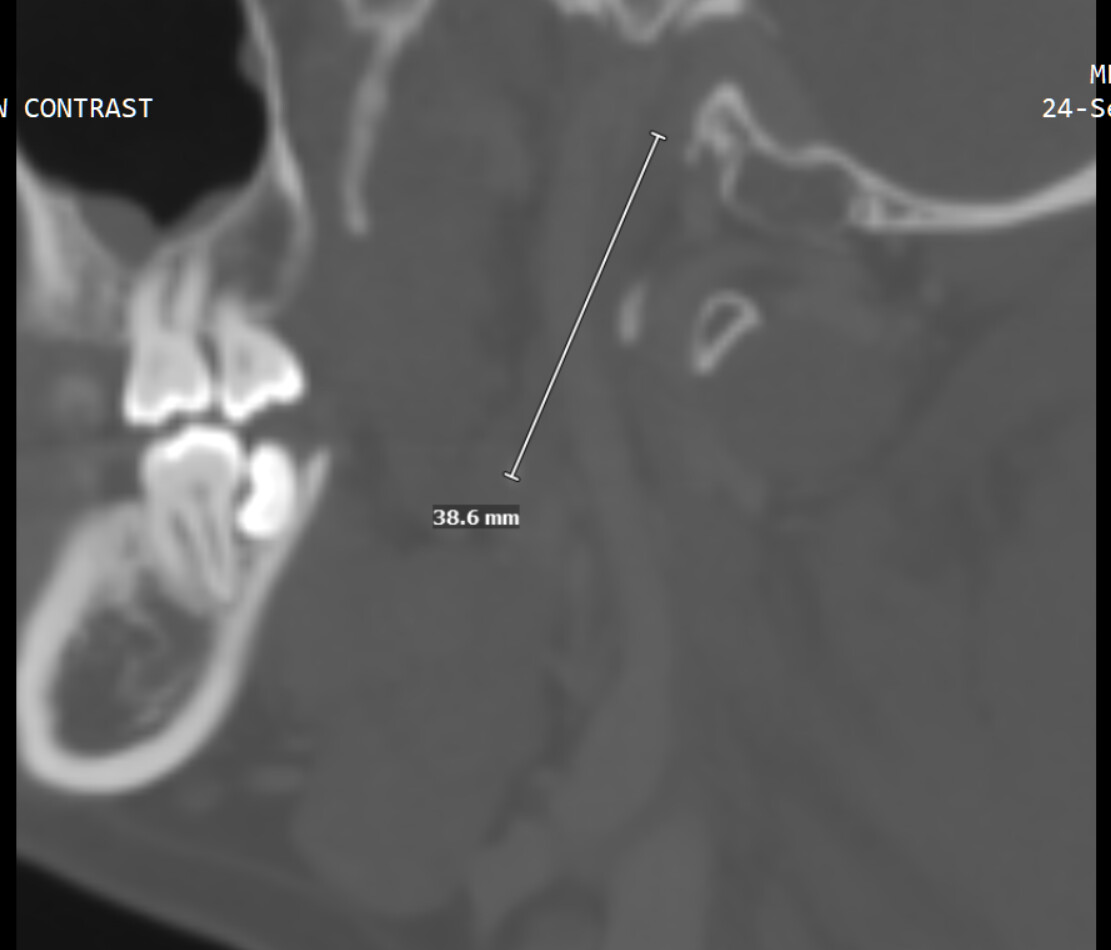
Thanks @TML and @Jules. So I did a new CT Scan with contrast and just got the records. I am still learning to identify where the styloid process is, but I did notice 4 screenshots taken, which include some measurement, presumably of the styloid process.

I will share the full file with @TML and anyone else who kindly offers to help me take a look.

1 Like

The acid reducer did help make my stomach feel a lot better, and for a few days my globus sensation was reduced, to the point that I am almost convinced they are related. But it didn’t last long, so it may be a coincidence rather than a correlation.

My nerve block is scheduled next Monday so I will see how that goes. Also I made my mind to do a consultation with Dr. Samji, for at least a second opinion even if not the surgery.

I will keep updating as I go

2 Likes

Thanks for sharing!

Do you know how many of these surgeries Dr Merati has done?

He mentioned it’s a rare symptom so he and his colleagues specialized in that probably each do a few a year.

I will go through the topic you shared, but it will take me a few days to fully digest.

One quick question - What’s the best way to find out if my symptoms are more likely ‘classic’ ES or vascular ES?

@qchero - The best way to find out if your symptoms have a vascular component is if your internal jugular veins or your internal/external carotid arteries appear to be compressed by the styloid processes. In the case of the IJVs, compression usually occurs between the styloid & C1 vertebra. In the case of the carotids, compression can occur at the tips of the styloids depending on their length or angle/curve of growth, or by the greater horns of the hyoid depending on their length or angle of growth, or both. Those things should show up on your CT w/ contrast.

Symptoms are part 2 of that story i.e. if there is visual compression of the IJVS or ICA/ECAs & you have associated symptoms of compression then we would suggest you have vES.

2 Likes

It looks like you might have some IJV compression where you’ve put the arrow on the image, but @TML can give you more info about that…
There’s more detailed explanations about the classic symptoms & the vascular ones in the Newbies Guide section here:
ES Information: Common Symptoms And Possible Explanations For Them - Welcome / Newbies Guide to Eagle Syndrome - Living with Eagle
From your description of your symptoms, it sounds like you have symptoms of both, like quite a few of us have.

1 Like

@qchero see attached annotated imaging (5 here and 2 in a following post)

Between the skull-base and C1, your left styloid is compressing your left IJV. Your right styloid is also touching your right IJV at this level, but the compression is not as bad.

At the level of C1, both IJVs are being compressed between the styloids and C1. Also around this level, your left styloid is in direct contact with your left ICA.

You have collateral veins formed on the back of your neck, which typically arises due to severe IJV compression.

Further down, your left greater horn is in close proximity to the carotid bifurcation (an area where the ICA and ECA come together/separate).

Hope this helps. Keep in mind I am NOT a doctor nor radiologist.

3 Likes

3D model showing your collateral veins and rough measurements of your left and right styloid/stylohyoid ligament calcification.

4 Likes

I found ES Information: Common Symptoms And Possible Explanations For Them to be extremely helpful! And I took some notes for my future reference, and for others with similar symptons.

“Research states that if the ECA is compressed, pain is in the infraorbital (below the eye and to the side of the nose), temporal, and mastoid regions (below and behind the ear). If the ICA is compressed, then pain is in the ophthalmic area”

My early stage foreign-body sensation is close to the ICA/ECA compression symptoms here, which explains the sensation radiation - initially behind the eyes, then below the eye and behind the nose. Probably ICA and ophthalmic area if I had to guess.

“If the Glossopharyngeal Nerve (Cranial Nerve IX) is pulled across the Styloid Process, then it can cause sharp, stabbing pain to the Temporomandibular Joint region, the ear, the temple, throat, tongue and neck (Anniker Isberg).”

But now, my dominate sensation or pain area is close to TMJ - an area below my eyes, behind my nose, up a bit from the base of my tongue. And I do feel noticeable sensation changes when moving my jaw in certain specific ways - when opening from 30% to 70%, also when moving left and right when it’s 30% open.

(Also the SLN nerve block injection today didn’t help much, so it’s either a different nerve like CN IX, or I need a few more days for the effect to kick in. So I will update again by then.)

“One symptom of GPN can be ‘globus’- the sensation of something poking/ stuck in the throat, but this ‘foreign body’ sensation can also often be caused by GERD, which explains why often members are diagnosed and treated for this before ES is found”

Exactly why my doctor mentioned reflux. But I should probably be more clear that my sensation isn’t inside the throat, but to the right of it, or somewhere between the throat and the neck skin. It’s just hard to identify and describe and it could be a combination of areas I mentioned above..

“This results in a forward head posture, which seems to alter the styloids in relation to the IJV. This is can be due to looking at phone or computer screens, but could also be a subconscious way to create space between the styloids & IJVs.”

I can confirm my head posture is indeed forward and I did use phone and computer A LOT. I remember reading somewhere that ES is more common in recent years, probably due to increasing popularity of mobile phones and apps. I think head posture is very likely a contributing factor. And then my tonsillectomy at 4~5 year old. And then maybe just genetic - my dad has a very similar head posture.

1 Like

Thanks a ton for the analysis! You just gave me more details than I could ever get, even from the doctors I have talked to in the past few years :laughing:. I really appreciate your help, and this community!

With these, and some reading and my analysis, I think my symptom could be a combination of some or all of these:

  1. IJV compression based on many CT scan evidences, potentially causing some brain pressure/tiredness/slow thinking but not confident as I also get much anxiety from work and kids…
  2. Potential ICA/ECA compression, causing minor foreign-body sensation in the eye/nose area
  3. Potential nerve compression likely Glossopharyngeal Nerve, causing major foreign-body sensation and pain in the TMJ area - Can be confirmed by a nerve block I think

I know these won’t be 100% correct so I will keep searching…

2 Likes

Sometimes it’s unclear exactly what is causing which symptoms, but what we do see is that most of those you mentioned are often relieved once the styloid is shortened as close to the skull base as possible. If C1 is also contributing to IJV compression then having a bit of the transverse process removed can help the IJV open completely as you know.

I hope you’re able to get an appointment w/ a knowledgeable doctor ASAP!

2 Likes