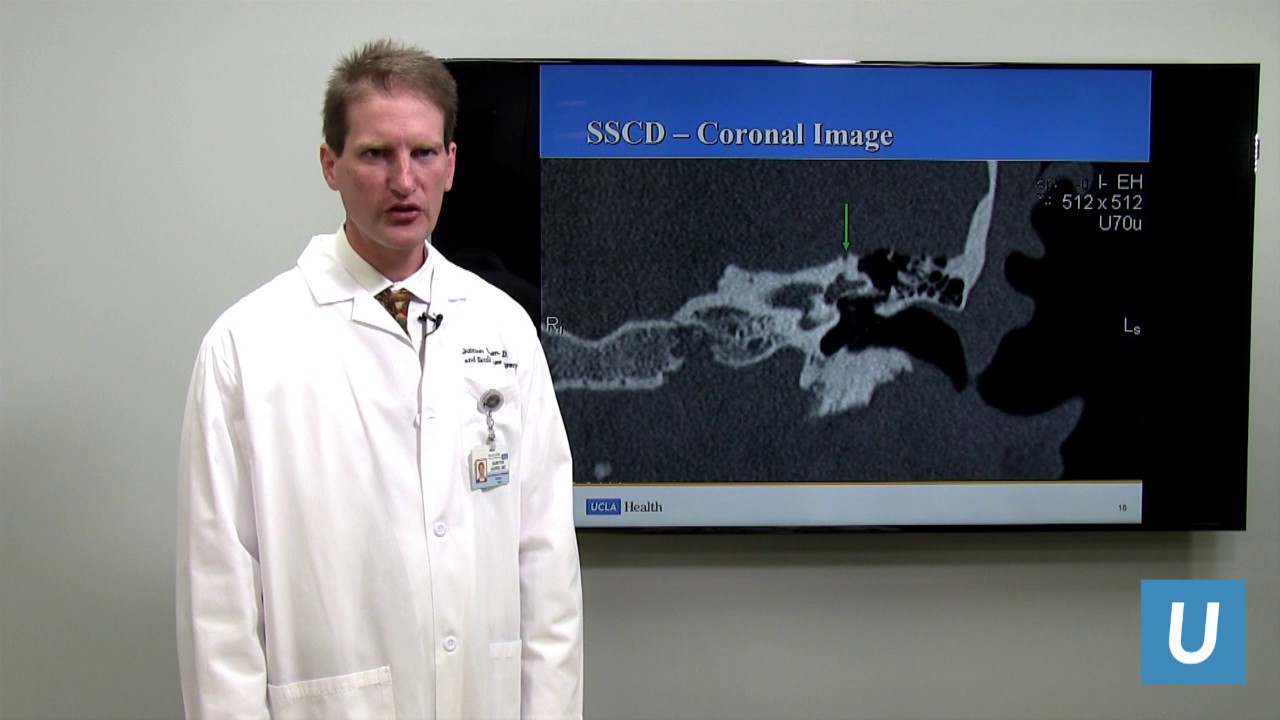
It sounds to me like you may have Semicircular Canal Dehiscence Syndrome (SCDS) which is a thinning of one of the bones in the inner ear that allows you to hear sounds inside your head. Here’s a video done by one of the most experienced SCDS surgeons in the US discussing the syndrome:
Did your CT of the temporal bone show styloid elongation or was that even looked for? The gold standard CT for diagnosing ES is a CT w/ contrast of the area between skull base (temporal bone) & the hyoid bone (under your chin). If your temporal bone CT doesn’t show much below the temporal bone, see if you can get the CT I just recommended.
Hi! My ent said he checked for Semicircular dehiscence with the ct temporal bone and he said he saw no signs of it and the radiologist didn’t either. My ct temporal bone was read normal.
Many of our members have CT imaging that isn’t correctly read i.e. styloids will be called “normal” when they’re hugely long. Vascular compression will be severe & radiologists call it normal, etc. It’s always worth getting a second opinion.
Hi, yes i should be able to! The confusing part is that it feels like my eustachian tube is dysfunctional with all the pressure, middle ear popping, clogging, ear muscle spasms along with the constant pulsatile tinnitus but the ent says they look perfect. If it were eagles would it present this way? Thank you
Hey @jessicah, I currently experience all of those symptoms as well, except for the autophony. My right has the pain, crackling, tinnitus etc and my left has been doing the weird muscle twitches around the ear for about four months. I have elongated styloids on both sides & got (finally) diagnosed with Eagle in January.
Message me if you ever want to vent… I am so sorry you are experiencing all these issues with your ear(s). There is so much kindness and compassion on this forum and I hope we can be encouragement for you.
With Vascular ES if there’s Internal Jugular Vein compression you can get fullness/ pressure/ clogged feelings in the ears, and also pulsatile tinnitus. Head and ear pressure can be caused by this too, so a CT with contrast, timed to show the arteries but especially the veins would be helpful. Have you got any copies of the CT you had before? If so you could upload it & we could take a quick look? We’re not doctors on here but as @Isaiah_40_31 says, often the styloids aren’t commented on when people have imaging done!
IJV compression can be minor (40-50%) & still cause symptoms. Some people have more significant compression (75-80%) & don’t have bad symptoms so the degree of compression that causes symptoms is inconsistent.
There is no level of IJV compression that diagnoses ES. Eagle Syndrome is defined as 1) elongation of the styloid process(es) OR 2) calcification of the stylohyoid ligament(s) OR 3) a combination of 1 & 2. It’s not just styloid length but also the thickness, how curved they are & the angle they’re growing that can cause symptoms. Unfortunately, the only “cure” for ES is surgical removal of the elongated styloid(s) &/or calcified stylohyoid ligaments. A CT scan of the area between skull base & hyoid bone is the gold standard for diagnosing ES. If vascular symptoms are suspected then a CT scan w/ contrast is best.